
Why More Retailers Are Rethinking the Locked Cabinet
Seven point seven minutes. That’s the average wait a shopper faces to get help with merchandise behind a traditional lock, according to a 2024 field study of 626 drug, grocery, and mass-market stores across the US and Canada. Not the walk from the register. The whole transaction: finding an associate, finding the right key, and getting the case open.
Customer Self-Access is the name InVue gives this approach: a verified, trusted shopper gets a controlled way to open one secured fixture themselves, on the retailer’s terms, without needing an associate for every single unlock. It’s a self-service model, but a narrow one. It’s not about automating the store the way self-checkout or a kiosk does.
It’s about removing the associate from one specific moment, unlocking a case, while everything else about the shopping trip stays the same. It’s a small change on paper. For the shopper standing at the case, it changes everything.
Why the Wait Exists in the First Place
That pressure comes from somewhere. NRF’s 2025 Impact of Retail Theft and Violence Report, based on a survey of 70 retail companies representing 168 brands and $1.3 trillion in 2024 sales, found retailers reported a combined 19 percent increase in external shoplifting and merchandise theft incidents from 2023 to 2024. Forty-seven percent of retailers now have merchandise-locking cages, cases, or hooks in at least half their stores, up from 41 percent the year before.
Retailers responded the way most of us would: they locked more things up. And a Numerator survey of more than 5,000 shoppers found the tradeoff cuts both ways. More than a quarter of shoppers who hit a traditionally locked item leave that retailer without buying anything, whether that means switching to a competitor or walking away from the purchase entirely.
Walgreens has seen the same thing firsthand. On a January 2025 earnings call, the same quarter the company reported a 52 percent jump in shrink, CEO Tim Wentworth acknowledged that locked products tend to sell less.
The lock isn’t the problem. The wait that comes with it is.
Retail Theft Prevention Still Matters, But It Shouldn’t Cost You the Sale
None of this is an argument against locking anything up. Products that need protection should stay protected, and for most merchandise, that still means a controlled, associate-assisted process. That’s the foundation of any real retail theft prevention program, and it isn’t going anywhere.
The better question is whether every shopper needs to wait for an associate to reach the same product. Retailers already know a lot of their shoppers, and newer tools make it possible to verify the rest in seconds. That opens the door to giving trusted shoppers access to secured merchandise without taking control away from the retailer.
Not Everything Locked Deserves the Same Level of Friction
Most retailers didn’t design their locking strategy. It accumulated, category by category, as shrink pressure grew. Cosmetics got locked. Then razors. Then OTC medication, batteries, detergent, whatever the current sweep target happens to be. Few retailers have gone back and asked which of those categories actually need the same level of friction as, say, a display case of premium electronics.
A useful way to think about it is risk tiering. High-value, high-resale items, the kind organized retail crime actually targets, justify tighter control and probably still warrant an associate in the loop. Lower-value, high-frequency items that got locked more out of category-wide policy than individual risk are where self-access makes the most sense. The point isn’t picking one access control policy for the whole store. It’s matching merchandise accessibility to the level of actual risk, aisle by aisle.
There’s a labor cost hiding in this, too. Every unlock request pulls an associate off whatever they were doing, whether that’s a return, a restock, or the customer already at the register. Loss prevention data consistently shows associate time is one of the least-measured costs of a heavy locking strategy, right alongside the sales that quietly evaporate.
How the Market Is Responding
Retailers and vendors are experimenting with different answers to the same problem, since customer wait times in retail have become a competitive issue, not just an operational one. A Consumer World reader survey found that when shoppers hit a locked case, fewer than one in three bother to summon an employee at all. More than half say they’ll just look for the item somewhere else. And these days, somewhere else is often a few taps away online.
That’s pushed a number of major retailers to pilot self-service unlock programs. Many of the early versions are built around a single access method, usually the retailer’s own loyalty app. That works well for retailers with an established loyalty program and a shopper base already used to using it. It’s a narrower starting point than most retailers actually need.
It’s not an isolated trend, either. NRF’s 2025 Impact of Retail Theft and Violence Report found 16 percent of retailers are already piloting, actively rolling out, or fully operational on customer-accessible merchandise locks or cases, with another 23 percent actively researching the category. Separately, 29 percent of retailers report they’re already investing in technology or staff specifically to improve the customer experience around security measures, and NRF’s own example of what that looks like is enabling customers to unlock cases through a mobile app. Secure self-service loss prevention isn’t a hypothetical category. It’s already showing up in how a meaningful share of retailers are spending their budget.
This is where Customer Self-Access comes in.
Customer Self-Access: InVue’s Approach
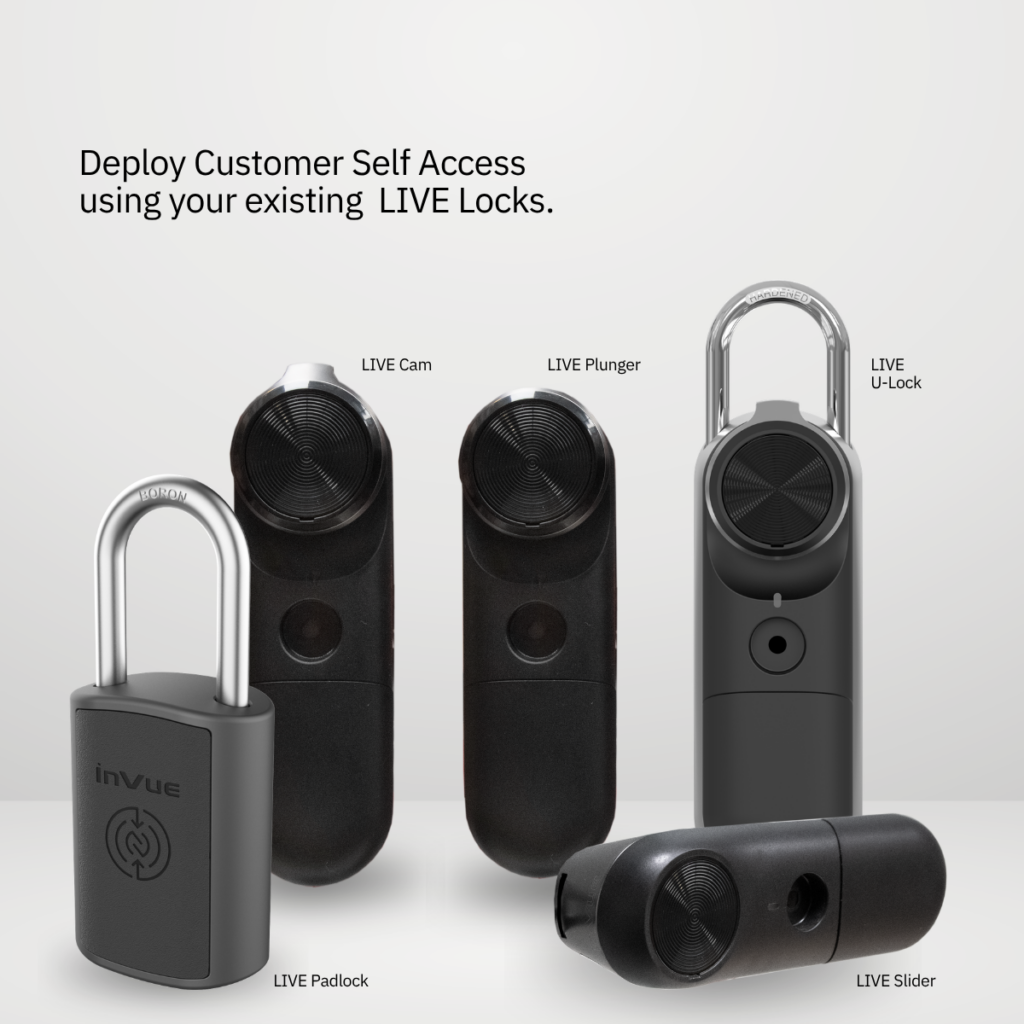
Customer Self-Access is an InVue solution that gives trusted shoppers a secure, self-service way to open merchandise protected by compatible LIVE Locks, instead of waiting on an associate every time. It runs on the fixtures you already have, which is a different starting point than a purpose-built case or a new proprietary device.
Retailers can enable it through a few different paths, and they’re not locked into just one:
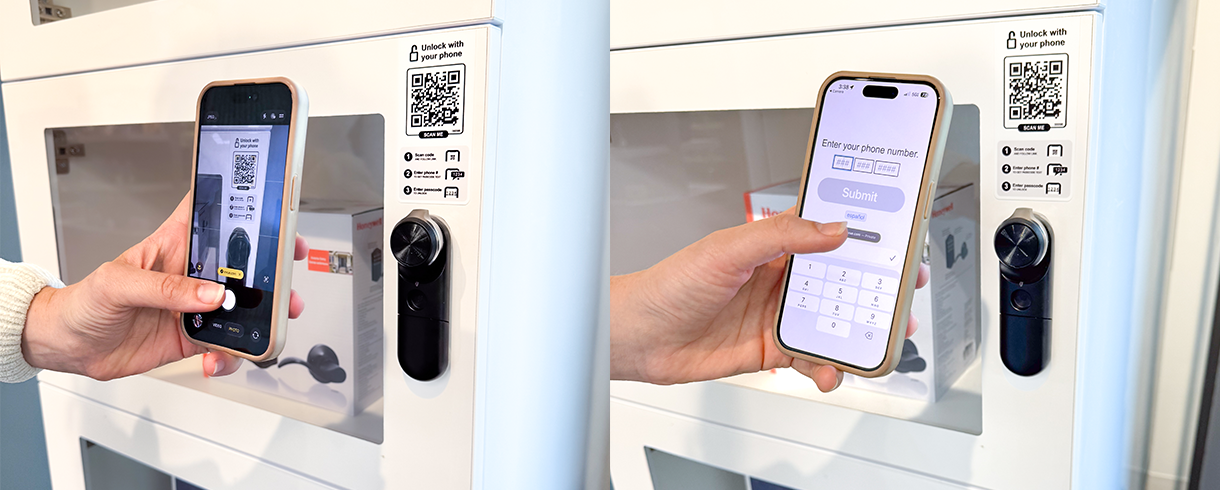
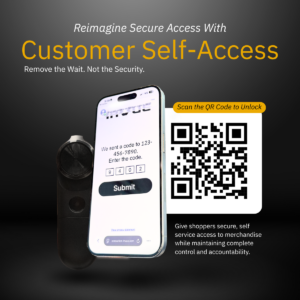
QR Code Access. The shopper scans a code on the fixture and gets a unique access code by text before the lock releases. No app required, no account to create.
Retailer Mobile App. Self-access gets built directly into a retail or loyalty app you already run, which also gives shoppers a reason to open that app in the first place.
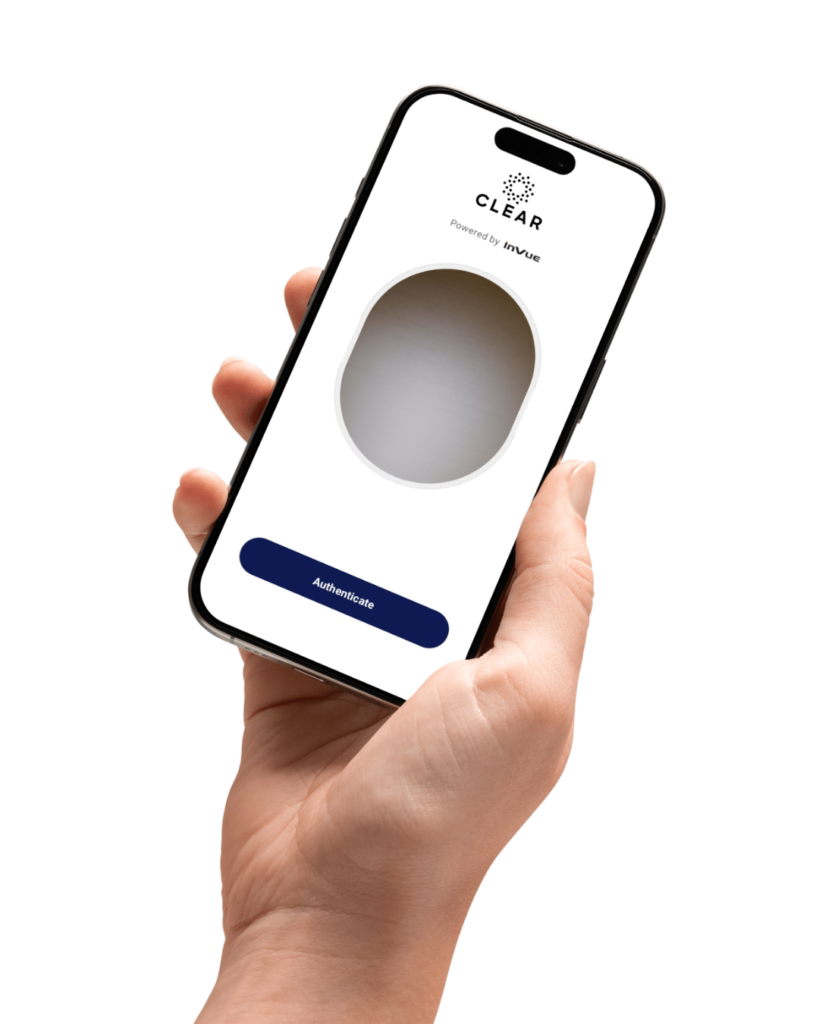
Third-Party Verification. Through InVue’s partnership with CLEAR, a shopper scans the QR code on the fixture, CLEAR verifies their identity, and the cabinet unlocks automatically once they’re approved under the retailer’s access policies. Returning CLEAR users verify in seconds with a selfie; new users complete a quick one-time setup that carries over to future visits. CLEAR reports that 89 percent of people associate the brand with security and reliability, and 74 percent say they’re more likely to trust a retailer that partners with them, which matters when you’re asking a shopper to verify their identity at a cabinet door.
Which path makes sense depends less on the retailer and more on what’s behind the glass.
Matching Access Method to Risk
This is where risk tiering becomes practical instead of theoretical. Not every access method fits every fixture or every category, and the right answer usually depends on how much verification the moment actually calls for.
For high-frequency, lower-risk categories, QR code access tends to fit best. It’s fast, requires nothing from the shopper beyond a phone camera, and matches the low-friction expectation the category deserves.
For retailers with an established loyalty program, routing access through the existing app makes the most sense for known, repeat shoppers, and doubles as a reason to grow app adoption.
For your highest-risk, highest-value fixtures, the ones you’d still want an associate involved with in most cases, CLEAR’s identity verification gives you a self-access option that doesn’t sacrifice the accountability those categories demand.
None of this is prescriptive out of the box. It’s a decision retailers make fixture by fixture, based on what’s actually behind the glass.
The Retailer Still Calls the Shots
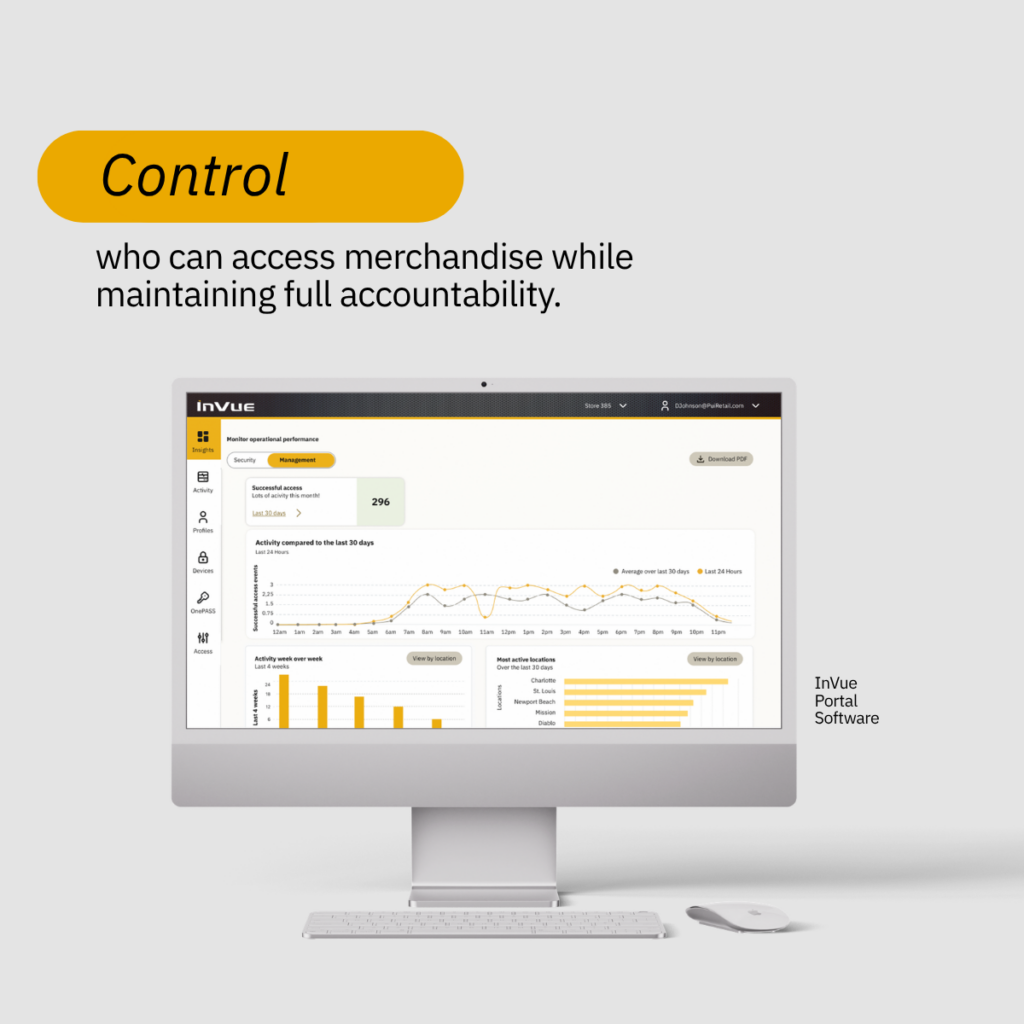
Staying in control is the whole point. Turning on self-access doesn’t mean handing over the keys and hoping for the best. You decide who gets access, where it’s available, and how that access gets verified. Every access event stays governed and traceable through the connected OneKEY environment, so you’re not trading visibility for convenience. You’re getting both.
That control extends to rollout. You can turn self-access on for one department, one merchandise category, or one location, watch how it performs, then expand it or pull it back.
Start Small, Measure, Expand
Adapting as you learn beats guessing up front. The retailers getting the most out of this aren’t flipping a storewide switch. They’re picking one category where wait times are already a known problem, one that’s more nuisance than genuine ORC target, turning self-access on there, and watching what happens to unlock volume, associate time, and sales in that category before deciding what’s next.
That’s a deliberately slow approach, and it’s the right one. A phased rollout gives you real data instead of a guess, and it means a misstep in one category never touches the rest of the store.
Builds on What You Already Have
Working with what you already have is the starting point. Customer Self-Access runs on top of OneKEY LIVE Locks, so it’s not a fixture replacement project. If your cabinets, cases, and displays already run on compatible LIVE Locks, self-access is closer to a configuration decision than a construction one. It’s built for the fixture types already doing the heavy lifting in most stores: cabinets and drawers, glass display cases, high-value open displays, merchandise cages, custom fixtures built for a specific category, and other compatible OneKEY LIVE Lock applications.
“Same lock, same software, different ways to verify” is how Taylor Topper, InVue’s Global Director of Marketing, has described it internally. The infrastructure retailers already run doesn’t change. What changes is who’s allowed to use it, and how.
Where This Fits, and Where It Doesn’t
Customer self-access isn’t a recommendation to unlock everything and see what happens. Most secured merchandise will still move through an associate, and that’s the right call for plenty of categories, especially the ones organized retail crime actually targets. This doesn’t eliminate the role associates play in assisted selling, and it doesn’t mean merchandise sits unsecured. It’s not an all-or-nothing, storewide switch, either.
It’s one more option in the mix, built for the categories where the wait does more damage than theft ever would
The 7.7-minute wait isn’t going to fix itself, and adding more locks was never going to be the answer either. If a category in your store is losing sales to the wait, not the theft, that’s worth a closer look.
See how Customer Self-Access works on your current fixtures.
Interested in learning more about how InVue can help you reduce shrink while enhancing the customer experience? Contact our team today.

