
The Fragrance Tester Problem: How Retailers Balance Accessibility and Shrink
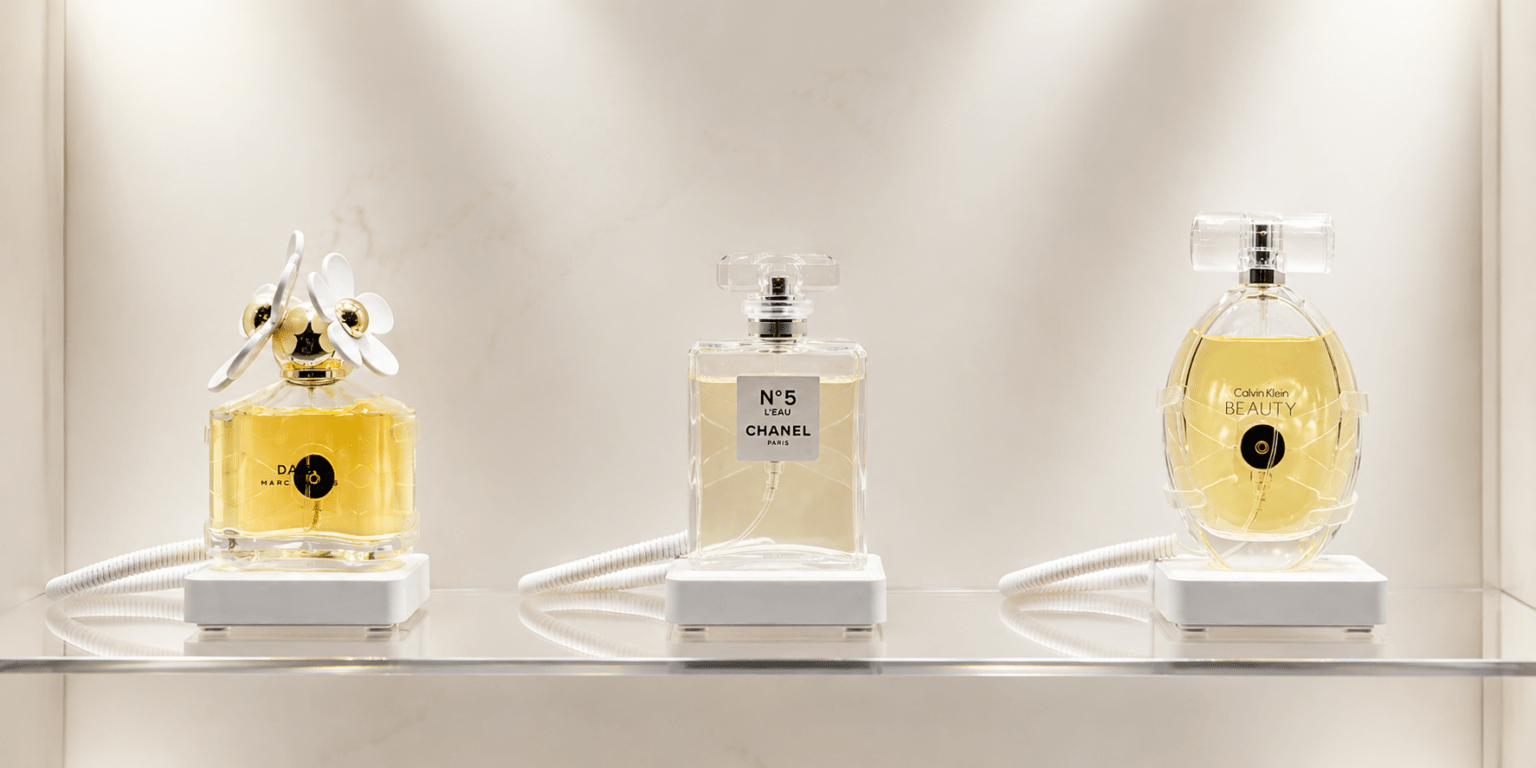
Fragrance is one of the most tactile categories in beauty retail. Customers don’t buy perfume because it looks good on a shelf. They buy it because they smelled it, held it, tested it on their wrist. The trial moment is the selling moment. That’s what makes security in this category so much harder to get right than anywhere else in the store.
Lock it behind glass, and you’ve killed that moment. Leave it open, and you’re managing a category that’s consistently among the most stolen in health and beauty.
Most security guidance treats fragrance like any other high-value product. It isn’t. The presentation requirements are different, the reasons it gets stolen are different, and the way customers interact with it is different. Getting the security approach right means understanding all three.
Why Fragrance Is a Different Kind of Risk
A high-end fragrance bottle can retail for $80, $150, or more. It’s small, easy to conceal, and instantly resalable. That combination makes it attractive to both opportunistic shoplifters and organized retail crime groups alike.
It shows in the numbers, too. Nearly one-third of retailers report beauty and personal care products among their most stolen categories.
But what complicates the security equation is the tester. Fragrance counters typically display unsealed testers alongside or in place of the packaged product. Those testers are expensive to replace, and they’re not going to do their job if a customer can’t get to them. If your security setup requires someone to ask an associate every time they want to smell something, most people just won’t bother.
Then there’s the display format itself. Fragrance is often merchandised in open, visually driven floor displays or countertop arrangements designed to draw shoppers in. The aesthetic is part of the sell. Bulky security hardware or locked cases can undercut that presentation entirely.
The challenge isn’t just stopping theft. It’s doing it in a way that doesn’t make the shopping experience feel like a transaction at a pawn shop.
It’s also why the cost of fragrance theft goes well beyond the bottle that walks out the door. Theft, and the security that comes with it, affects product availability, how associates spend their time, how the category gets merchandised, and whether shoppers stick around long enough to buy.
Most of those costs never show up in a shrink report. A bare shelf, an associate pulled off the floor, a display redesigned around a lock instead of the product. They add up quietly, and they’re easy to miss when you’re only measuring what went missing.
InVue’s free guide, More Than Shrink: The Business of Security in Health & Beauty Retail, puts those hidden costs on the table. It also includes a practical scorecard you can use to see where your current security strategy is helping sales and where it might be holding them back.
The Problem with Traditional Approaches
Locking fragrances in a cabinet or behind glass does reduce theft. But it also reduces sales. When customers can’t interact with a product, they don’t buy it. This is especially true in a category where the sensory experience is everything.
The difference is measurable. Stores with accessible testers have seen an 85 to 100 percent sales lift compared to stores without testers.
Requiring associate assistance for every interaction creates a different problem. It puts pressure on floor staff, slows down the customer, and introduces friction at exactly the moment you want things to feel easy and inviting. During peak hours or when staff is stretched thin, customers who can’t get help in a reasonable amount of time simply leave.
Neither approach is really a solution. They just move the problem somewhere else.
What a Better Approach Looks Like
The retailers who handle fragrance security well have separated the questions of access and security. Customers can still interact with the product. Theft is still prevented.
The good news is there’s more than one way to get there.
The right tester security depends on your available space, how your fixtures are built, and how often your assortment changes. Here’s how the most common approaches compare.
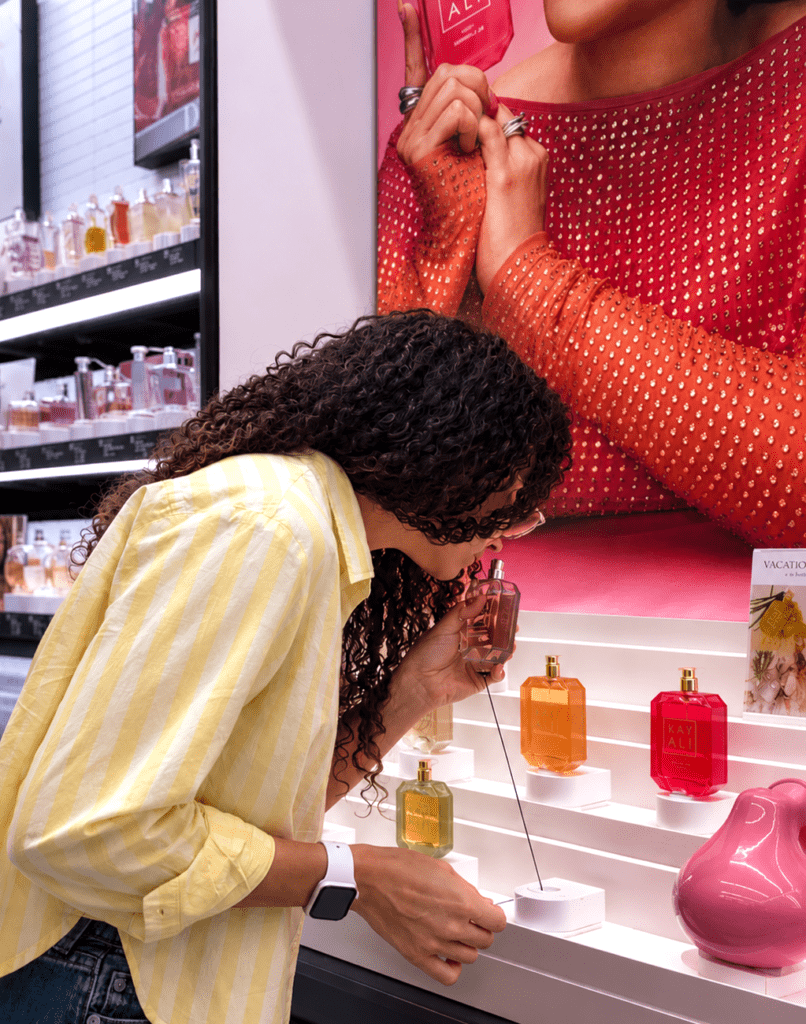
Benefit denial is one of the simplest ways to protect a tester. The tester is permanently fixed to the display, so there’s no reason to take it.
InVue’s Stage is an elevated display platform built on this approach. It supports flexible layouts and premium presentation, and it’s quick to remerchandise when the assortment changes.
For stores that want a higher-tech option, alarmed displays add another layer of protection that connects to the rest of the store’s security.
Zips Podium is a free-standing tester display that pairs alarming protection with authorized access control. Its clear, form-fitting sensor keeps the bottle design visible, and a 95dB alarm responds instantly to removal or tampering. It’s also compatible with OneKEY, so associates can use the same key they already carry for other fixtures.
Not every fixture has room for a dedicated tester display. Stage Bar is an all-in-one tester display that mounts near sell-through merchandise, bringing tester access to fixtures where display space is limited.
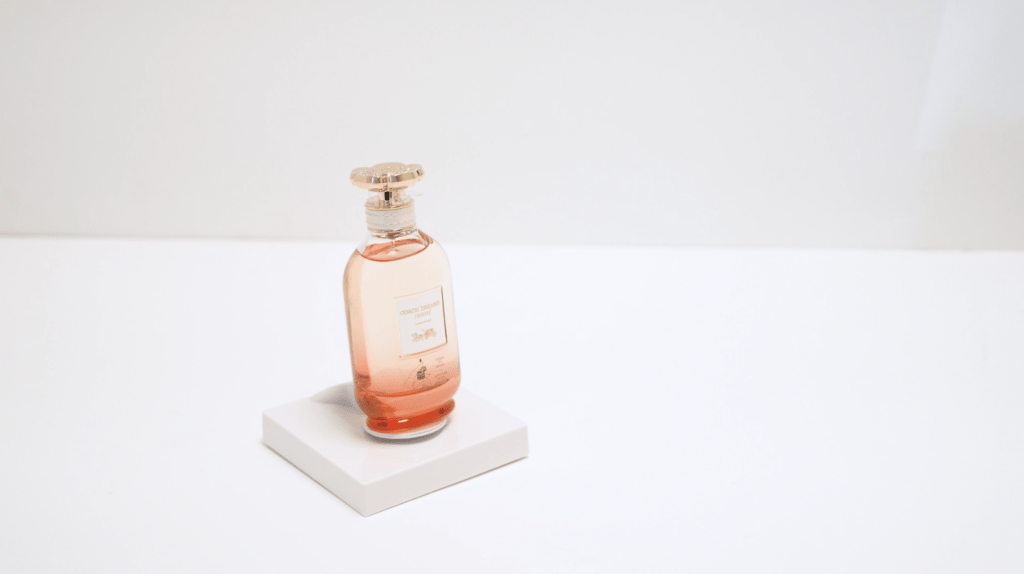
Some brands want tester security that disappears into the fixture. Tile is a low-profile display that blends into fragrance fixtures for clean, consistent merchandising, comes in square or circular formats, and sits at a budget-friendly price point.
Many of these solutions integrate into existing fixtures without a full redesign. Modular layouts also make it easier to adapt for seasonal launches and planogram updates. You can compare the full lineup on InVue’s fragrance security page.
When Cabinets and Fixtures Are Still in the Mix
Not every fragrance setup will move to an open display model. Some stores will keep cabinets, drawers, or enclosed counters for their highest-value bottles, and that’s a reasonable call. The question is what’s controlling access to those fixtures.
Traditional keys create real problems. They get shared, lost, and duplicated. There’s no record of who opened what or when.
InVue’s fragrance locking solutions replace those keys with fast, trackable access. The LIVE Slider Lock is built for sliding glass fragrance cases, and the LIVE Plunger Lock secures metal-frame glass doors and wood bypass doors. The Self-Latching Drawer & Door Lock protects drawers and cabinets without relying on associates to relock after every interaction.
All of them are part of the OneKEY ecosystem, which means one key works across your locked fixtures. LIVE Locks add mobile access on top of that, so associates can unlock with OneKEY, a mobile device, or both.
With LIVE Locks, every access is logged automatically. You’ll know who opened which fixture and when, which matters for loss prevention and for understanding how your floor is actually operating day to day. And because LIVE Locks are part of the OneKEY Ecosystem, that visibility doesn’t stop at the fragrance counter. The same view of unlock activity and user permissions extends across every connected fixture in the store.
Don’t Overlook the Internal Side of Fragrance Theft
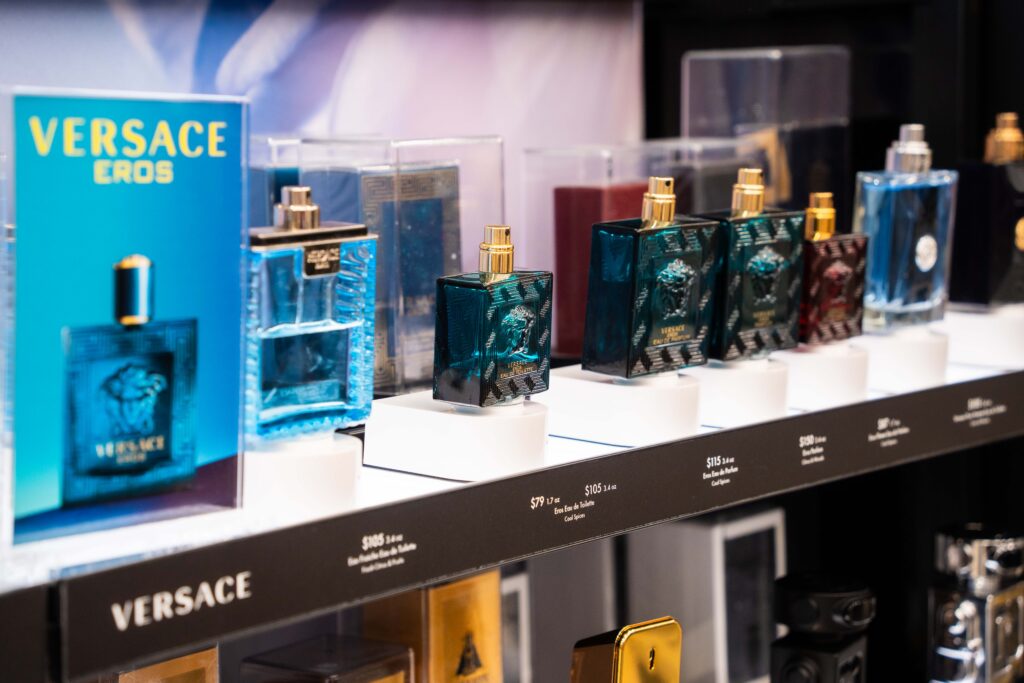
One aspect of fragrance security that doesn’t get enough attention is internal. High-value products in beauty are vulnerable to employee theft as much as customer theft, especially when access is loosely controlled or managed with a shared key ring.
Employee theft accounts for 30 percent of retail shrink, not far behind the 36 percent that comes from external theft.
This is where the locked side of the fragrance floor matters most. With LIVE Locks, access to cabinets, cases, and drawers can be assigned by individual associate. Someone authorized to restock the fragrance counter has a key that reflects that level of access. Someone who isn’t, doesn’t.
And because every access is logged, there’s a clear audit trail if something goes missing. Open tester displays and locked fixtures do different jobs. Testers keep the product in customers’ hands, and smart locks keep your sell-through inventory accountable.
For a deeper look at how key management affects the entire health and beauty floor, not just the fragrance counter, read The Hidden Operational Cost of Traditional Keys in Health & Beauty Stores.
Getting the Balance Right
There’s no single right answer for every fragrance setup. A department store counter operates differently than a pharmacy beauty aisle or a specialty retailer. Floor space, staffing models, price points, and customer expectations all shape what security looks like in practice.
What doesn’t change is the underlying goal: customers should be able to experience the product, and you should be able to protect it. In fragrance retail, those two things are more connected than they might seem. When a customer can smell something, pick it up, and take their time with it, they’re far more likely to buy it. Security that gets in the way of that isn’t just an inconvenience. It’s a revenue problem.
The right security solution for fragrance isn’t the one that stops the most theft. It’s the one that stops theft without stopping the sale.
Want to see how InVue approaches security for fragrance and beauty retail? Explore the full fragrance security portfolio or contact our team to talk through your store’s setup.
Interested in learning more about how InVue can help you reduce shrink while enhancing the customer experience? Contact our team today.

