
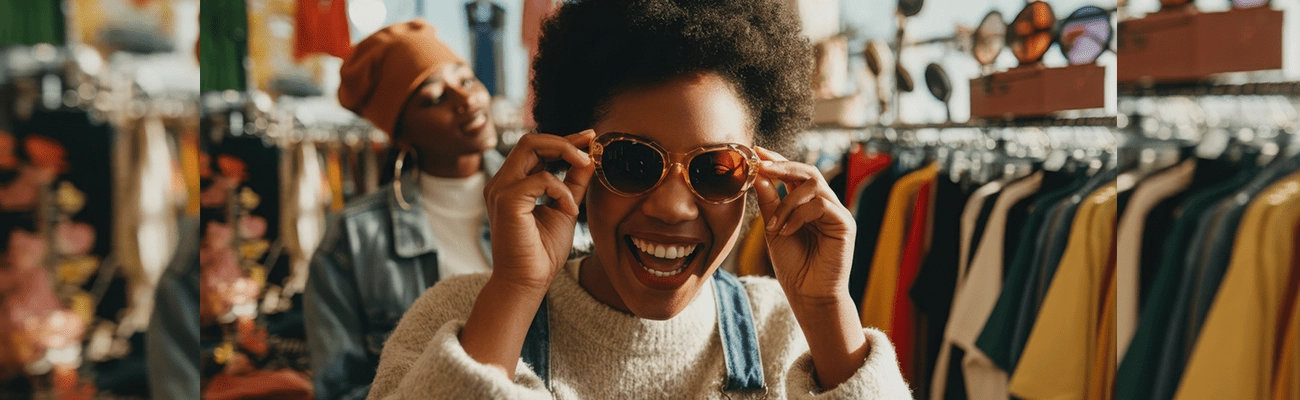
Gen Z can discover almost anything without ever walking into a store.
Their feeds know what they like. TikTok can introduce them to a product they weren’t looking for, show them how someone else uses it, lead them into the comments for opinions, and send them somewhere else to compare prices or dig deeper. They have more ways to discover, research, and shop from a screen than any generation before them.
And yet, they still want the store.
Research from youth culture agency Archrival found that 78% of Gen Z believe physical stores will always have a purpose. Seventy-three percent prefer making a purchase in-store over social media. And when asked where they’re most open to discovering a new brand or product, Gen Z was split exactly down the middle: 50% said while scrolling social media. The other 50% said while walking through a store.
For a generation surrounded by digital discovery, that’s a pretty strong vote for physical retail.
So what exactly is the store giving them that a screen can’t?
Part of the answer starts with understanding how Gen Z shops in the first place.
Archrival describes their consumer journey through two mindsets: Inspire and Inquire. Rather than progressing neatly from awareness to consideration to purchase, Gen Z moves between the two depending on what they need in the moment.
Sometimes they’re looking for inspiration. Sixty-two percent say the abundance of content available leaves them feeling inspired, and 71% say they’re always open to discovering new brands. Something appears in their feed, catches their attention, and suddenly a product they weren’t looking for is on their radar.
Then they might start to inquire. – Price. Fit. Materials. Features. Reviews. How does it actually work? Is it worth the money? What do people who bought it think? Sixty-six percent say they prefer doing a lot of research when shopping rather than buying impulsively. And they don’t necessarily do all of that research in one place. A shopper can move from TikTok to YouTube to Reddit to Amazon reviews, then walk into a store and pull their phone back out while standing in the aisle.
The physical store isn’t necessarily the final stop in Gen Z’s shopping journey. It can be part of the discovery and research itself.
But discovery is only part of what draws this generation into stores. Seventy-four percent of Gen Z say IRL experiences are more inspiring than digital ones. For a generation surrounded by digital content, the physical world still offers something meaningful: the chance to participate rather than just scroll.
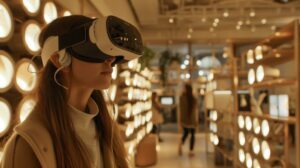
In a store, inspiration can become something tangible. You can walk in looking for one thing and notice another across the aisle. Pick something up because the packaging caught your eye. See two products beside each other. Feel the material. Try the device. Smell the fragrance. Ask someone a question. Put something back. Pick it up again.
The report gives a great example from one Gen Z participant who describes going to Target for basics and leaving with completely unrelated products simply because she passed them in the store. Another talks about being inspired by furniture and home décor she wasn’t looking for because of how the merchandise was arranged.
There’s something almost algorithmic about that experience. Online, an algorithm serves up something you didn’t know you wanted.
In a store, the environment itself can do the same thing, but with an experience attached.
Merchandising, assortment, displays, product launches, samples, and other in-store experiences can give shoppers a reason to explore rather than simply complete a transaction. The products themselves become part of that experience.
And that’s something a digital recommendation can’t fully reproduce. A shopper can actually reach out and experience what they’ve discovered for themselves.
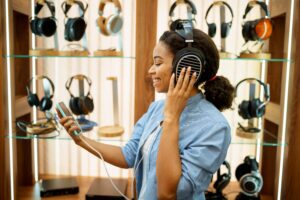
If one of physical retail’s advantages is the ability to see, touch, try, compare and explore products, retailers have to preserve those behaviors while also protecting merchandise.
And for Gen Z, “try before you buy” is bigger than simply testing a product.
Archrival’s research suggests this generation wants stores to serve both sides of how they shop: Inspire and Inquire. New-product introductions, playful merchandising, in-store experiences and opportunities to interact with products can give shoppers a reason to explore, while firsthand product interaction can help them answer the questions that come next.
That makes the merchandise itself part of the experience.
A pair of smart glasses you can pick up and put on can introduce you to a technology you’ve only seen online. A fragrance tester lets you experience something no TikTok review can replicate. Picking up the latest phone or trying a pair of headphones can turn curiosity into comparison: How does it feel? How does it sound? Is it actually worth the hype?
The same interaction can inspire discovery and help a Gen Z shoppers (and all shoppers) make a decision.
That’s part of what makes physical retail valuable. But it’s also where the challenge for retailers begins.
Many of the products shoppers most want to interact with are also products retailers need to protect. Smart devices, fragrances, beauty products, consumer electronics and other high-value or high-theft merchandise can’t simply be left vulnerable.
Security, however, can change the experience around them.
A product shoppers can pick up and explore creates a different experience from one they can only look at. Merchandise that remains visible and part of the display creates a different opportunity for discovery than merchandise removed from the shopping environment. And when something does need to be locked, the ease with which a shopper can get access becomes part of the experience too.
That doesn’t mean every product should be freely accessible or that retailers should compromise security for experience.
It means how a product is secured matters.
The question isn’t simply, How do we prevent someone from taking this?
It’s also, what should a legitimate shopper still be able to do?
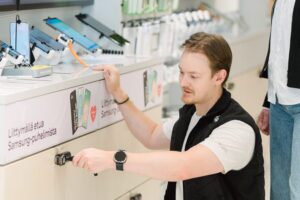
For retailers, protecting merchandise and creating a good customer experience have never been entirely separate challenges. Gen Z makes that connection particularly visible.
If shoppers are coming to stores partly because they can interact with products in ways they can’t online, retailers have to think carefully about anything that gets between the shopper and the product.
How do you protect merchandise without removing the behaviors that make physical retail valuable in the first place?
At InVue, we spend a lot of time thinking about this balance because retail security doesn’t exist separately from the shopping experience. The goal isn’t simply to secure merchandise. It’s to give retailers the level of protection they need while preserving as much of the product experience as possible.
And that can look different across the store. Display security can let shoppers interact with electronics while they’re protected. Package protection can help keep high-risk merchandise available and visible rather than removing it from the shopping environment. When merchandise does need to be locked, access control can help associates get shoppers to products more efficiently, while Customer Self Access can give shoppers a way to get access to secured merchandise without assistance.
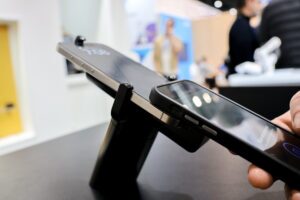
Across these different approaches, the OneKEY ecosystem can simplify how authorized associates access and manage secured merchandise throughout the store.
The right approach won’t be identical for every product, category, or store. That’s the point. The goal isn’t less security. It’s security designed around the interaction the retailer wants to preserve for its audience.
Gen Z isn’t choosing between pixels and bricks.
Their shopping journey can begin on TikTok, continue in a store, jump to Reddit and end on a retailer’s website. Or it can happen in an entirely different order.
The opportunity for physical retail isn’t to recreate the internet inside the store. It’s to lean into what being there physically makes possible.
Discovery. Inspiration. Immediate access. Human interaction. Seeing something unexpected. Picking it up. Trying it. Deciding for yourself.
For a generation with more ways than ever to discover products without leaving home, the fact that they still want to walk into stores says something important.
The physical store still has an experience worth protecting.

