
Why Traditional Key Management Is Costing Hypermarket Retailers More Than They Realize
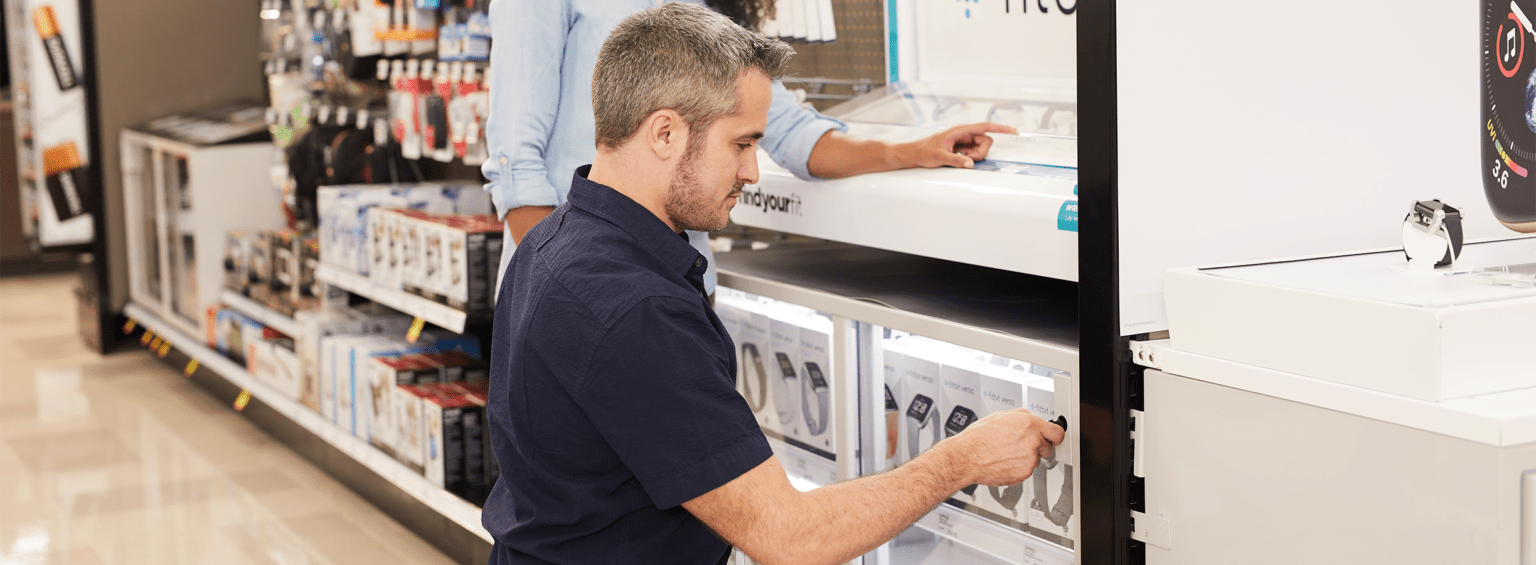
Every hypermarket and big box retail store has a version of the same problem. A customer wants to buy a pair of headphones behind glass. Or printer ink from a locked cabinet. Or an expensive electric toothbrush secured in a display. Instead of simply picking up the product, they have to track down an associate, who then has to locate the right key, sometimes even calling another associate for help before unlocking the fixture.
That sequence runs dozens of times a day. Nobody’s measuring it. And it’s costing more than most operators realize.
Traditional key management in hypermarket and big box retail isn’t treated as a problem because it’s become part of the routine. But accepted friction is still friction. It slows customer service, pulls associates away from other tasks, and creates operational inefficiencies that add up over the course of every day.
What the Key Ring Actually Costs You
Walk through a hypermarket or big box retail store and you’ll find secured fixtures spread across multiple departments. Consumer electronics, baby products, health and wellness, sporting goods, premium beverages. Each department often has its own lock, its own key, and its own process for granting access.
The result isn’t just a locked product. It’s a store that depends on physical keys to keep everyday operations moving.
Every time an associate leaves what they’re doing to unlock a fixture, something else waits. Merchandising pauses. Stocking is interrupted. Another customer waits for assistance elsewhere. Multiply those interruptions across dozens of interactions every day, and the operational cost quickly becomes much larger than the few seconds it takes to unlock a cabinet.
The cost isn’t just measured in minutes. It’s measured in:
– Lost sales when customers walk away instead of waiting.
– Labor hours spent managing keys instead of helping shoppers.
– Delayed merchandising and replenishment.
– Shopping experience that’s slower and more frustrating than it needs to be.
That’s not a worst-case scenario. That’s a Tuesday afternoon
The delay isn’t caused by the lock itself. It’s caused by the process surrounding the key. If that’s a familiar challenge in your stores, 4 Ways Traditional Keys Are Hurting Your Retail Store and Customer Experience covers that specifically.
Customers who can’t get timely help abandon the interaction. Some come back. Many don’t. The associate managing the key and the cabinet is unavailable to the next customer who needed them. In categories where product interaction influences purchase decisions, those delays have a real cost. They just don’t show up anywhere obvious.
The Shared Key Problem
The key ring is an operational cost. The shared key is a loss prevention problem, and the two often come packaged together.
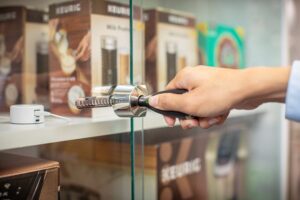
When a single key, or a small set of keys, circulates among multiple associates across multiple shifts, accountability disappears entirely. There’s no record of who opened which cabinet when. If a high-value product goes missing, you can’t determine whether it left with a customer or during a shift change. You can’t identify whether the same fixture was accessed repeatedly in a short window. You don’t have visibility into anything.
This matters even more in hypermarkets and big box retail environments. High-value merchandise is spread across multiple departments, with products that are easy to conceal, easy to resell, and frequently accessed throughout the day. A shared key doesn’t just create an accountability gap. It creates an opening, and in categories with elevated shrink risk, that opening gets found.
When a key goes missing entirely, the disruption compounds. Fixtures stay locked while a replacement is sourced. Product that should be on display isn’t accessible. Sales stop in that section of the store until the situation is resolved. For categories that rely on customer interaction before purchase, that downtime has a direct revenue cost.
Multiple Lock Types Make It Worse
Hypermarkets and big box retailers typically run a mix of fixture types: glass cabinets, drawers, display cases, locked shelving, and back-of-house storage. Each tends to have its own lock format and its own key. Associates managing multiple fixture types carry multiple keys and have to identify the right one for each situation, a small but persistent drag on efficiency that compounds across every shift.
It also creates onboarding complexity. New associates have to learn which key opens which fixture before they can help a customer with a locked product. In an environment with frequent staff turnover and multiple departments, that’s a recurring cost that never gets attributed to the key system because nobody’s framing it that way.
The result is a store that moves slower than it should, where associates spend more time managing hardware than helping customers, and where the security system creates as many problems as it solves.
What Changes With OneKEY
The OneKEY ecosystem replaces the key ring with a single electronic key that works across every secured fixture in the store. Cabinets, display cases, drawers, secured shelving: one key handles all of it. Associates stop hunting for the right one and start spending that time on the sales floor where it belongs.
Because each key is associate-specific, every access event is logged. You know who opened which fixture, when, and how many times. That audit trail is what makes accountability possible, and it’s what turns a loss prevention hunch into a documented pattern when something goes missing.
If a key is lost or stolen, it’s deactivated immediately. No locksmith. No exposure window while you figure out which fixtures are at risk. Access is revoked and the store keeps running.
For stores that want to go further, the OneKEY Mobile App turns store-issued or associate-owned devices into digital credentials. No physical key to carry, no key to lose. Associates access fixtures from their phone and the same complete audit trail applies.
What Your Security System Should Be Telling You
The operational improvement is real. But the more significant change is what happens to loss prevention visibility.
With a shared key system, internal theft is nearly impossible to attribute. High-value merchandise moves through multiple hands across multiple shifts with no access record attached to any of it. When something goes missing, the investigation has nowhere to start.
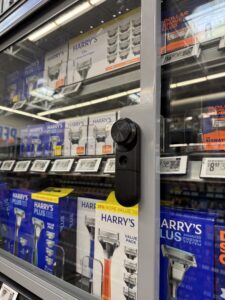
With OneKEY, access is assigned by individual associate. Someone authorized to access the consumer electronics department has a key that reflects exactly that level of access. Someone who isn’t authorized, doesn’t. Every access event is logged by user, time, and location. LP teams can review patterns, flag anomalies, and build a timeline if an incident needs escalation.
That’s not a feature. It’s a fundamental change in what your security system can tell you about what’s happening across your store.

The Real Cost of Doing Nothing
Key management problems in hypermarkets and big box retail tend to stay invisible right up until they become expensive. A slow service interaction doesn’t get logged anywhere. A shared key that enables an internal theft event looks the same as a legitimate access event. A lost key triggers a replacement process that gets absorbed as a cost of doing business.
None of it shows up in the shrink report. All of it shows up in margins.
The retailers who’ve moved away from traditional key systems don’t describe it as a technology upgrade. They describe it as finally having visibility into a part of their operation they were running blind on. That’s what the key ring was actually costing them. Not just time. Clarity.
If your store is still running on a shared key ring, that’s worth a direct conversation about what you’re actually able to see, and what you aren’t.
Contact our team to talk through how the OneKEY ecosystem works in hypermarket and big box retail environments.

