
Why the Future of AI Eyewear Will Be Won In-Store, Not Online
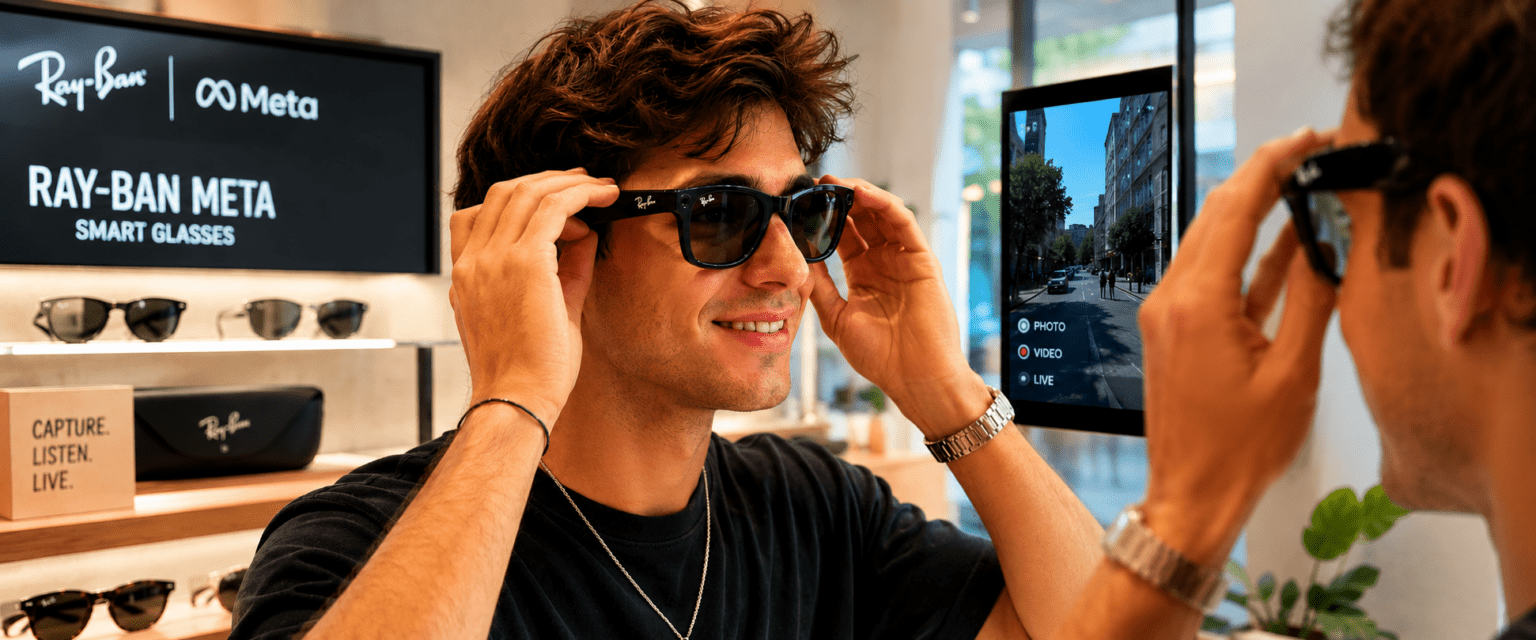
For years, the conversation around wearable technology has focused on the technology itself.
Better cameras. Faster processors. Smarter AI.
But as the latest wave of AI-powered eyewear enters the market, the companies that win may not be the ones with the most advanced technology—they may be the ones that create the best customer experience.
Meta’s recent expansion into branded smart glasses, combined with new entries from Google, Samsung, Apple, and Snap, signals that AI eyewear is moving from niche gadget to mainstream consumer category. The race is no longer about proving the technology works. It’s about convincing consumers to wear it.
And that’s where retail becomes the battleground.
AI Eyewear Faces a Familiar Challenge
Technology companies have spent decades trying to make wearables mainstream. Smartwatches eventually succeeded because they became both functional and fashionable. Smart glasses face an even greater hurdle.
Eyewear is deeply personal.
Consumers don’t simply buy glasses because of features. They buy based on fit, comfort, style, identity, and confidence.
No amount of AI-generated marketing can replace the moment a shopper puts on a frame and instantly knows whether it feels right.
As AI eyewear adoption grows, physical retail will become increasingly important as a discovery, education, and trial destination.
Social Media Restrictions May Accelerate the Shift
At the same time, brands are facing another emerging challenge.
Countries around the world are introducing restrictions on social media access for younger audiences. While enforcement remains a work in progress, the trend is clear: brands may find it increasingly difficult to rely on social platforms alone to create awareness and engagement with future consumers.
For categories like fashion, beauty, and eyewear—where younger consumers often shape trends before they become purchasers—this creates a significant shift.
If digital reach becomes harder to achieve, brands will need to create more meaningful physical experiences.
Stores become media. Products become content. Experiences become marketing.
The retailers and brands that create memorable hands-on interactions will have an advantage over those relying solely on digital impressions and algorithms.
The Opportunity—and Challenge—for Retailers
AI eyewear presents a unique retail challenge.
Unlike traditional sunglasses or optical frames, these products are high-value, highly desirable, and often contain sophisticated electronics.
Retailers need shoppers to touch them. Try them on. Experience the AI. Understand the functionality.
But they also need to protect them.
Historically, security and accessibility have existed in tension. The more secure a product becomes, the harder it can be for consumers to engage with it. The more accessible it becomes, the greater the risk of theft and loss.
The future of retail requires eliminating that tradeoff.
Security Must Become Part of the Experience
As AI eyewear and luxury accessories continue to grow, retailers will need solutions that protect merchandise without disrupting the customer journey.
The most effective retail security solutions are becoming nearly invisible—integrating seamlessly into the store environment while enabling customers to interact with products naturally.
Luxury brands have understood this principle for years. Security cannot come at the expense of aesthetics.
Nor can it create friction that undermines the premium experience consumers expect.
That philosophy drove the development of solutions like InVue’s Luxe Lock, created in partnership with a premier luxury fashion house. The objective wasn’t simply to secure merchandise. It was to deliver sophisticated protection that aligned with the brand’s design standards while preserving an elevated customer experience.
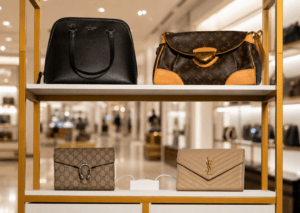
The same thinking has guided our work across some of the world’s most recognized brands and technology innovators. As new categories of connected devices and wearables have emerged, InVue has partnered with brands—including Meta—to help retailers make products more accessible, interactive, and engaging in-store while maintaining the security required for high-value merchandise.
This balance between access and protection is becoming increasingly important as AI-powered eyewear enters the mainstream. Consumers need the freedom to touch, try, and experience these products firsthand. Retailers need confidence that those experiences can happen without increasing risk.
The same challenge that once existed for luxury handbags and accessories now extends to AI eyewear, connected devices, and the next generation of wearable technology.
The Next Generation of Retail Is Intelligent Access
As AI transforms products, it will also transform how consumers shop.
Success won’t come from simply displaying products behind glass or relying on traditional loss prevention tactics. Retailers will need intelligent access strategies that balance protection, accessibility, and customer experience.
Consumers will expect to interact with AI-powered products before making a purchase. Brands will need opportunities to educate and inspire. Store associates will need tools that help them engage customers instead of managing security barriers.
The future belongs to retailers that can create environments where products are both protected and accessible. Because in the age of AI, the most powerful marketing channel may not be a social platform, a search engine, or an AI assistant. It may be the moment a customer picks up a product, experiences it for themselves, and decides they can’t leave the store without it.
Ready to let customers experience your products the way they were meant to be experienced? Fill out the form below and discover how InVue helps brands remove barriers to product engagement.

