
How to Choose the Right Retail Cabinet Lock: 6 Features That Matter
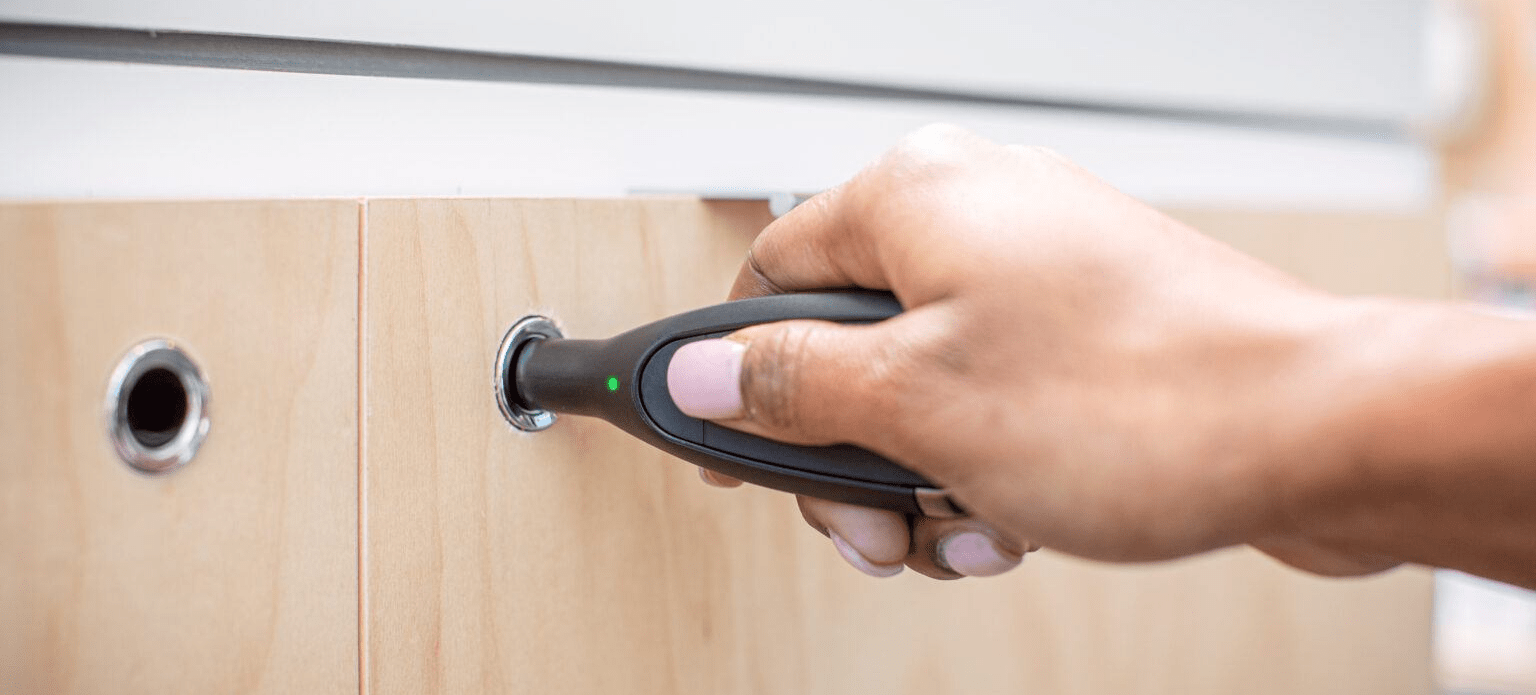
Protecting merchandise is important. But the right cabinet lock should do more than keep products secure. It should make access easier for associates, reduce friction for shoppers, and help retailers run more efficiently.
Locked cabinets have become a familiar sight in retail stores. From electronics and power tools to health and beauty products, retailers are securing more merchandise to help prevent theft and reduce shrink. But securing merchandise creates another challenge: getting it into customers’ hands.
When an associate has to locate a key, respond to an unlock request, or walk across the store to open a cabinet, a simple purchase can become a frustrating experience. For retailers managing hundreds of stores, those small delays can add up. That’s why choosing the right retail cabinet lock involves more than comparing security features. Today’s electronic cabinet locks and connected access control systems offer new ways to protect merchandise while improving how stores operate.
Here are six features retailers should consider when evaluating cabinet locks for their stores.
Not every cabinet needs the same level of security, and not every lock works with every fixture.
A sliding glass display case has different requirements than a wooden drawer, metal cabinet, or high-value merchandise enclosure. Choosing the right lock starts with understanding what you’re protecting and how associates need to access it.
Common retail cabinet lock configurations include:
- Cam locks: Designed for swing-out cabinet doors and drawers.
- Plunger locks: Commonly used on sliding glass or wood doors.
- Slider locks: Designed for sliding bypass glass doors.
- Self-latching locks: Automatically secure a door when it closes, helping prevent merchandise from being left unsecured.
Retailers should also consider installation requirements, fixture materials, durability, and whether the lock can be installed without modifying existing displays.
What to look for: A security solution that supports multiple fixture types and merchandise categories, allowing stores to standardize access without sacrificing flexibility.
Comparing Retail Cabinet Lock Options
Not all retail cabinet locks offer the same level of security, convenience, or visibility. Understanding the differences between traditional mechanical, electronic, and connected smart locks can help retailers choose the right solution for their stores.
| Feature | Mechanical Locks | Electronic Access Locks | Connected Smart Locks |
| Merchandise security | Physical locking mechanism | Electronically controlled locking | Electronically controlled locking |
| Access method | Traditional physical key | Electronic key, such as OneKEY | Electronic key or mobile credential |
| Shared access across fixtures | Requires compatible physical keys | One credential can access multiple compatible fixtures | Centrally managed credentials across compatible fixtures |
| Access audit trail | Not typically available | Available with supported systems | Detailed access activity and reporting |
| Centralized access management | No | Available with supported systems | Available through connected software |
| Mobile access | No | Not typically available | Available with supported systems |
| Customer Self-Access | No | Not typically available | Available with supported systems |
| Power requirements | No power required | Battery-free options available | Typically battery-powered |
| Retrofit compatibility | Widely available | Depends on lock and fixture | Depends on lock and fixture |
| Ongoing maintenance | Physical key management | Minimal maintenance with battery-free options | Battery and credential management |
| Best suited for | Basic cabinet security | Efficient associate access and simplified operations | Advanced access control, visibility, and customer experiences |
Features vary by manufacturer, product, and software configuration. Not all connected cabinet locks support remote unlocking or customer self-access.
Which Type of Cabinet Lock Is Right for Your Store?
Mechanical cabinet locks are a practical choice for retailers with basic security needs, particularly when access is limited to one or two associates responsible for managing physical keys.
Electronic cabinet locks help retailers simplify associate access and eliminate the challenges of traditional key management. Solutions like InVue’s battery-free OneKEY locks allow associates to access multiple secured fixtures with a single key, improving efficiency while minimizing maintenance.
Connected smart cabinet locks take access control further, providing greater visibility into access activity, centralized management, and mobile credentials. Solutions like InVue LIVE Locks also enable Customer Self-Access, allowing shoppers to unlock merchandise without waiting for an associate.
The right solution isn’t necessarily the one with the most features. It’s the one that balances merchandise security, ease of access, operational efficiency, and long-term value for your stores.
- Faster, Simpler Access for Store Associates
A cabinet lock is only effective if associates can use it efficiently. Traditional mechanical locks often require stores to manage multiple physical keys. Associates may need to share keys, locate a manager, or leave their department to access secured merchandise. Electronic cabinet locks can simplify this process by allowing authorized employees to access multiple fixtures using a common credential, such as an electronic key or mobile device.
This can help retailers:
- Reduce time spent searching for keys.
- Respond to customer requests more quickly.
- Simplify access for new and seasonal employees.
- Reduce the operational burden of managing and replacing physical keys.
For larger retail operations, consistency matters. A common access system across departments and locations makes it easier for associates to serve customers without learning different locking procedures for every fixture.
What to look for: An access solution that makes it easy for authorized associates to open merchandise wherever they’re working, without unnecessary steps or delays.
- Visibility Into Who Accessed Merchandise and When
Traditional cabinet locks can secure merchandise, but they generally provide limited information about what happens after a cabinet is opened. Who accessed the fixture? When was it opened? How frequently is merchandise being accessed? Connected retail cabinet locks can help answer these questions through electronic access records and audit trails. This visibility can be valuable for both asset protection and store operations.
For asset protection teams, access records can help identify unusual activity, investigate potential security incidents, and improve accountability.
For store operations, access activity can provide a better understanding of how secured merchandise is being managed across departments and locations.
Rather than relying solely on physical security, retailers can begin using access information to make more informed decisions.
What to look for: Electronic cabinet locks with user-level audit trails, access reporting, and software that makes information easy to review and act on.
- Easy Installation and Long-Term Maintenance
Replacing an entire cabinet or display fixture to upgrade security isn’t always practical, especially for retailers operating hundreds or thousands of stores. That’s why retrofit compatibility should be an important consideration. Look for locks that can work with existing glass, wood, and metal fixtures, with minimal drilling, wiring, or structural modifications. Maintenance requirements matter, too. Some electronic cabinet locks require batteries or local power connections. Others, such as InVue’s OneKEY Locks, receive power directly from the electronic key, eliminating the need for batteries inside the lock. Battery-powered connected locks can provide additional functionality, including mobile access and remote capabilities, but retailers should account for ongoing maintenance.
When evaluating total cost of ownership, consider more than the initial purchase price:
- Installation time and fixture modifications
- Battery replacement and maintenance requirements
- Employee training and credential management
- Lock replacement and service costs
- Software and ongoing licensing requirements
What to look for: A solution that fits your existing fixtures, is easy to maintain, and can scale without creating additional operational complexity.
- Flexible Access Options for Associates and Customers
One of the biggest changes in retail cabinet security is how merchandise can be accessed. For years, the standard experience has been simple: a customer finds a locked product, locates an associate, and waits for someone with the right key. But what if access didn’t always require an associate?
Modern connected cabinet locks can support different access methods depending on the retailer’s needs, including electronic keys, mobile credentials, and controlled remote unlocking. More advanced solutions can also enable Customer Self-Access, allowing verified shoppers to unlock select merchandise themselves without waiting for an employee. This doesn’t mean giving every shopper unrestricted access. Retailers can determine which merchandise qualifies, how customers are verified, and when access is permitted. For example, a retailer might enable self-access for certain health and beauty products while maintaining associate-assisted access for higher-risk merchandise. The goal is to give retailers more flexibility to balance security and convenience based on the needs of each department.
What to look for: A cabinet lock platform that supports multiple access methods and can adapt as customer expectations and store operations evolve.
- A Connected System That Can Grow With Your Business
A cabinet lock shouldn’t have to operate as an isolated piece of hardware. Retailers often manage security across multiple departments, fixture types, and store locations. When each solution requires a different key, credential, or management process, complexity grows quickly. An integrated access control system can help bring those activities together. Instead of managing individual locks independently, retailers can use a connected platform to assign access permissions, monitor activity, and manage security more consistently across their business.
Some platforms also provide insights into access patterns that can help retailers identify operational opportunities, such as frequently accessed fixtures or unusual access activity. And as retail technology evolves, a connected foundation can support additional capabilities without requiring retailers to start over.
What to look for: A scalable retail access control ecosystem that connects hardware, software, and access management, with the flexibility to support future needs.
Choosing a Cabinet Lock That Works Beyond Security
The right retail cabinet lock depends on your merchandise, fixtures, store operations, and security requirements. For some applications, a simple electronic lock with a common associate key may be all that’s needed. Other environments may benefit from connected locks that offer mobile access, centralized management, and customer self-service capabilities. The important thing is to think beyond the lock itself.
How easily can associates access merchandise? How much maintenance will the system require? What visibility will you have into access activity? And can the solution adapt as your business changes?
These questions can help retailers make a more informed investment, one that protects merchandise without creating unnecessary barriers to the shopping experience.
Smarter Cabinet Security Starts With Smarter Access
InVue’s OneKEY ecosystem helps retailers simplify merchandise access while maintaining security and control. From battery-free OneKEY Locks to connected LIVE Locks that support mobile access, remote capabilities, and Customer Self-Access, InVue offers flexible solutions for securing cabinets, display cases, drawers, and other retail fixtures.
Because protecting merchandise shouldn’t make it harder to sell.
Explore InVue’s Retail Cabinet Lock Solutions

