
Retail Theft in Home Improvement Stores: How to Protect High-Value Tools Without Slowing Sales
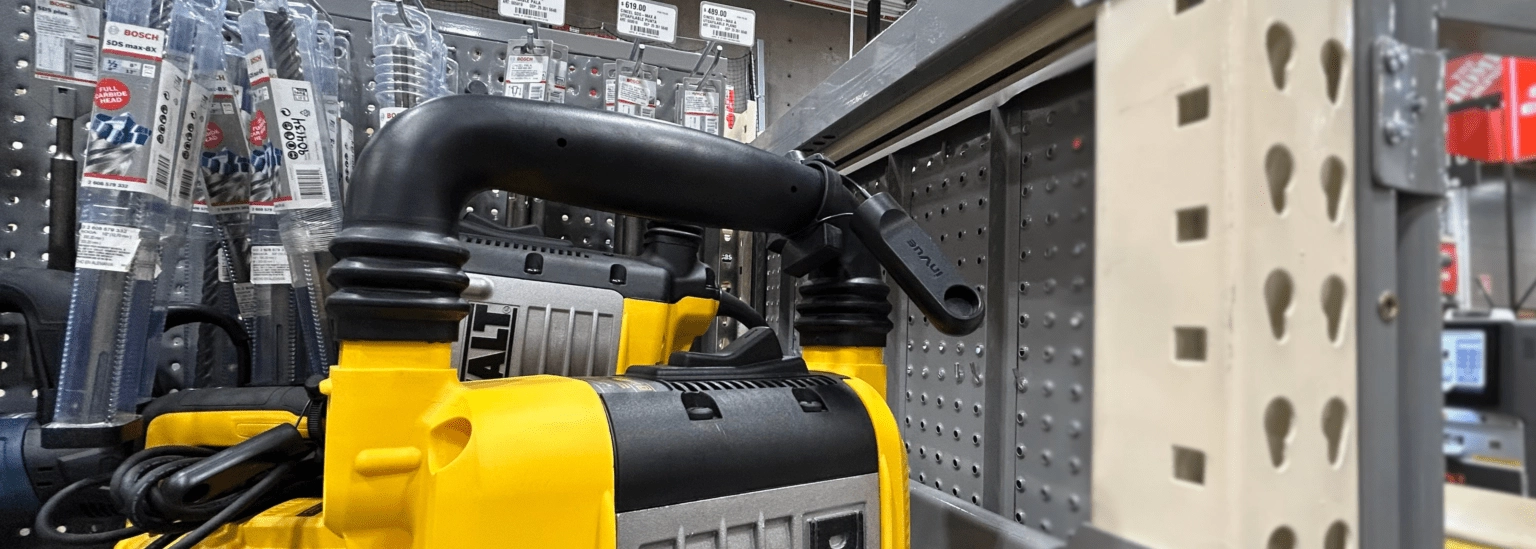
U.S. retailers lost an estimated $90 billion to inventory shrinkage in 2025. If you oversee loss prevention at a DIY or home improvement store, a disproportionate chunk of that loss is likely from your power tool aisle.
Cordless drills. Circular saws. Nail guns. Lithium batteries. They’re compact, expensive, and there’s a ready market for them the moment they leave without a receipt. That’s the theft problem. But the second problem, not in your shrink report, is that most hardware store security measures are costing sales.
The resale economics are straightforward. Stolen tools sell for roughly 50 to 70 percent of retail price on Facebook Marketplace and eBay, often listed the same day they’re stolen. A stolen Milwaukee M18 drill kit that retails for $249 is sold for $150 in cash within a few hours. Multiply that across a coordinated crew hitting multiple locations in a single day, and the math gets ugly fast.
This is why organized retail crime rings target home improvement. It’s not opportunistic, it’s operational. In 2025, a Queens DA investigation broke up a ring that stole $2.2 million from Home Depot locations across nine states. Power tools were the primary target. These operations survey stores, identify coverage gaps, and time their runs. A shared key code or an understaffed aisle is a green light.
Beyond the obvious categories, high-theft SKUs in hardware retail extend into electrical wire, copper fittings, plumbing hardware, and blade accessories, items that don’t look glamorous but move fast on the secondary market. The sweep method, where a peg of batteries or Diablo blades gets cleared in under ten seconds, is a specific ORC tactic that standard peg hooks do nothing to stop.
Shrinkage gets measured. The downstream effects usually don’t, and they’re significant.
When a high-value tool goes missing, that SKU goes out of stock. The customer who came specifically for it leaves without buying anything, no tool, no compatible batteries, no accessories, no job lot. The loss isn’t the drill. It’s the full basket.
Associate time is where the hidden cost compounds. Every minute spent responding to a theft event, re-merchandising a cleared display, tracking down the right person to unlock a product, or opening a secured cabinet for a customer who ultimately doesn’t buy is a minute an associate isn’t on the floor helping someone who will. In stores already running lean, that diversion matters. Our breakdown of retail shrinkage statistics consistently shows that operational costs outpace product costs when you account for labor, recovery time, and lost conversions.
Then there’s what happens to customer intent when they hit friction. Tool buyers are tactile; they want to hold the product, test the trigger, and check the weight before they commit. A locked display case or a sign that says “ask an associate” is not a minor inconvenience for this customer. It’s often the moment they decide to buy it on Amazon tonight instead. And the NRF’s finding that shoplifting incidents involving threats or violence increased 42 percent in 2024 adds another dimension: every time an associate has to confront a theft situation, that’s a risk that didn’t need to exist.

The standard response to power tool theft, more locks, heavier cables, and shared padlocks, feels like progress. It’s mostly friction.
Shared codes are the clearest failure point. When every associate on every shift knows the same access code for every showcase in the store, there’s no accountability. You can’t track who opened what. You can’t identify patterns. You can’t even confirm whether a loss was theft or an internal access event. It’s security theater with a key.
The key ring problem is real, too. Ten different keys for ten different fixture types means an associate has to identify the right key, find it on a ring, physically unlock the display, hand the customer the product, wait for them, re-lock, and track the key back. At scale, across a store with hundreds of secured SKUs, this kills service speed. Customers notice. Many don’t wait.
And glass cases are a different kind of damage. Tool buyers need hands-on interaction to commit. That’s not a preference; it’s how they make purchase decisions. Removing that interaction to prevent theft works, technically, in the sense that theft drops. But so does conversion. The DIY and hardware retail teams that have moved away from locked displays consistently find that the trade-off wasn’t worth it.
Store layout makes it all harder. High shelving, sprawling footprints, and product spread across dozens of fixture types create coverage gaps that one-size security products can’t fill. A solution that works on slatwall doesn’t necessarily work on Unistrut. Gaps get found.
The right retail theft prevention strategy requires a shift in mindset: security measures must support and enhance the sales process, not obstruct it. Instead of adding more security products, focus on approaches that foster safe but seamless sales.
That means:
- Customers can pick up, test, and interact freely with the product. An alarm only activates if the security is tampered with.
- Associates access secured merchandise quickly, without searching for keys.
- Associate-level accountability prevents shared access, while tracking provides visibility into how products are accessed and which items are performing best.
- The solution fits with your current fixtures, requiring no store redesign.
InVue’s approach for DIY retailers is built around exactly that framework.
Hardware theft isn’t uniform, so hardware security shouldn’t be either.
 | Power tools: drills, saws, nail guns on open display.
The right approach depends on your product type, display setup, and risk level—often combining solutions across the same category. |
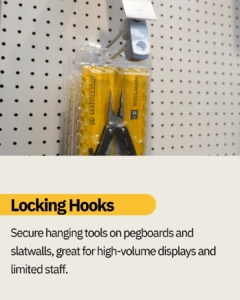 | Batteries and small accessories: This is where the sweep method lives. Standard peg hooks are no match for a coordinated team. The IR StopLok and Locking Hooks are the workhorses here; compatible with existing peg fixtures, OneKEY-controlled, and built to protect hanging merchandise without locking out customers who just want to pick it up and check the weight.both part of the OneKEY ecosystem, bring controlled access to the peg without changing what customers see or how they shop. |
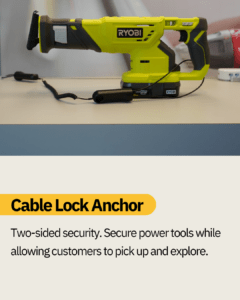
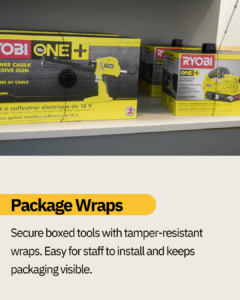 | Packaged goods: wire, fittings, plumbing hardware. The Package Wrap addresses this at the product level rather than the display level. Steel cable, dual-alarm system, and critically, it cannot be defeated with a magnet, which is a genuine vulnerability with traditional EAS tags. For higher-value packaged items that need to stay fixed to the display, Cable Lock Anchor adds a secure tether point with an alarm that activates if separation occurs.For bulk packaged merchandise, Package Wraps can be combined with Cable Lock Anchor to secure multiple items together—maintaining flexibility while adding an extra layer of protection. |
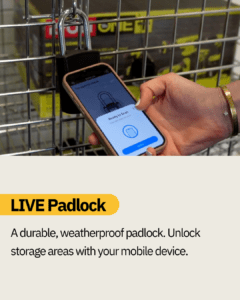 | For controlled-access areas: Stockrooms, tool cage entrances, and contractor pick-up—InVue LIVE Locks provide secure, flexible access through both mobile and key-based options. No rewiring. Two-year battery life. |
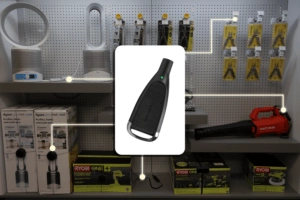 | Across all of it, the OneKEY: One IR-powered key opens every InVue-secured display in the store. Each key code is issued to an individual associate, digitally managed, auto-expires after a set period, and cannot be used at another location. Every access event is logged, creating a complete audit trail across the store. Retailers using OneKEY report a 33 percent reduction in theft, and 75 percent of store associates say it helps them serve customers faster. Those two numbers point to the same thing: security and service don’t have to be at odds. |
The Retailers Winning on This Are Not Choosing Sides
The framing of “security versus customer experience” is worth rejecting outright. It’s not a trade-off that has to exist.
Stores running InVue’s solutions in hardware and home improvement environments aren’t accepting more theft to preserve accessibility or a worse customer experience to reduce shrinkage. They’re doing both because the solution architecture enables both simultaneously.
Product stays on the floor, visible and interactive. Alarms trigger on unauthorized removal. Associates unlock with a single key in seconds. Every access event is tracked. And when a new fixture type shows up, because store layouts change, the security adapts to it rather than requiring a new program.
That’s not a vision statement. That’s how the DIY retail programs we run actually operate.
FAQ: Power Tool Theft Prevention for LP and Store Ops Teams
Why are power tools targeted more than other hardware categories?
Value density is the short answer. A cordless drill kit is worth $200, fits in a backpack, and sells on the secondary market within hours. ORC rings treat high-value tool categories like a supply chain; they know the demand and the price points, and they’ve refined their methods. Blades, batteries, and accessories follow the same logic at lower price points but higher volume.
Can hardware stores secure power tools without locking them up?
Yes, that’s exactly what tethered alarm systems are built for. Cable Lock, Cable Lock Anchor and Zips keep the product on open display while controlling access through the OneKEY ecosystem. Customers interact freely. Associates aren’t required to unlock anything for a standard engagement. No glass case, no cabinet, no “ask an associate” sign.
What is ORC, and why do hardware stores attract it?
Organized retail crime involves coordinated groups targeting retail for resale profit, not opportunistic shoplifting. Home improvement attracts ORC because high-value SKUs are numerous, individually portable, and have established resale channels. The 2025 Queens DA case involving $2.2 million in Home Depot theft across nine states is a documented example of how structured these operations have become.
Does heavy security actually hurt sales?
Locked displays reduce customer interaction, and in tool retail, interaction drives purchase. When shoppers can’t hold a product, weigh and feel it before buying, many don’t buy, particularly for high-consideration purchases. The customer who wanted to test the grip before committing is the customer who ends up ordering online. The OneKEY ecosystem is built specifically to prevent that outcome.
What if the store has multiple fixture types across the floor?
InVue’s products are designed to work across a wide range of fixture formats without requiring store redesign. If you’re running a mix of display types across the floor, and most hardware stores are, the security program should adapt to that reality, not the other way around.
Ready to Stop Losing Ground on Both Fronts?
Power tool theft is a constant challenge. But the gap between where most hardware retailers are today and where they could be, in both shrink and sales, is real and closeable.
InVue works with DIY and hardware retailers worldwide to build security solutions that don’t ask you to choose. If your current approach is costing you in ways that don’t show up on the shrink report, that’s probably the right conversation to start.
Talk to a DIY Retail Security Expert. Or fill out the form below.

